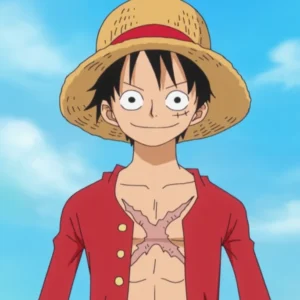

What if the greatest lesson about building wealth and achieving long-term goals isn’t sitting in a finance textbook or a self-help bestseller — but in a 1000-plus episode anime about a rubber boy who wants to be King of the Pirates?
Stay with me. Because this goes deeper than you think.
One Piece has been running since 1997. Eiichiro Oda has been building this world, these characters, and this story for over two decades with a consistency and intentionality that most human beings never apply to anything in their own lives. And hidden inside all the devil fruits, the Sea Kings, the Yonko, and the absolutely unhinged world-building — there is a masterclass in wealth-building philosophy, long-term goal setting, and the kind of mindset that actually creates extraordinary outcomes.
This isn’t a stretch. This is real. Let’s get into it.
The One Piece Itself — Why the Goal Has to Be Bigger Than Money
Here’s the first thing you need to understand about Monkey D. Luffy, and it’s the thing that separates him from every other captain sailing the Grand Line.
Luffy does not want the One Piece because it’s treasure.
He wants to be King of the Pirates. The One Piece is what finding it represents — freedom. Absolute, unlimited, uncompromising freedom. The treasure is a vehicle for the vision, not the vision itself. That distinction is everything.
Now think about how most people approach wealth building. They fixate on a number. A salary. An account balance. A net worth figure. And because the goal is the money itself, two things happen. Either they never reach it because abstract numbers don’t generate real motivation, or they reach it and feel completely empty because the money was never connected to anything that actually mattered to them.
Luffy never has this problem. His goal is so vivid, so specific in what it means to him emotionally, that no obstacle — not the Marines, not the Warlords, not the Yonko, not literal death — has ever made him reconsider it. That’s not stubbornness. That’s what a real long-term goal looks like when it’s built on identity rather than metrics.
The wealth-building lesson here is staggering in its simplicity. Build toward freedom, not a figure. Define what financial independence actually means for your life. The money follows the clarity. It always does.
Nami’s Arc Is Secretly the Most Brutally Honest Story About Financial Trauma in Anime
People talk about Zoro’s dedication. They talk about Sanji’s past. But Nami’s backstory contains something that most financial conversations completely ignore — the psychological weight of financial desperation and what it does to a person’s decision-making.
Nami grew up in a village stolen by Arlong. The deal she was forced into was this: collect 100 million berries, and Arlong would release her village. So she spent years stealing, conning, betraying, doing whatever it took — not for herself, but to hit a number that she believed would buy freedom for everyone she loved.
And then Arlong moved the goalposts. Every time she got close, he found a way to reset the clock. He took her savings. He changed the terms. He made sure she could never actually win by the rules of the game he had designed.
This is not a pirate story. This is a story about debt traps. About predatory systems that keep people working without ever building equity. About what it feels like to grind with everything you have and still get nowhere because the structure itself is rigged against you.
Nami’s breakdown when Luffy finds her — when she’s stabbing Arlong’s tattoo on her arm in the rain — is one of the most emotionally raw moments in the entire series. And what follows it is the lesson. Luffy doesn’t offer her a financial plan. He puts his hat on her head. He tells her without words that she doesn’t have to carry this alone anymore.
Because real wealth building? Real financial progress? It doesn’t happen in isolation. It happens with the right crew. And that’s the next lesson.
Why Your Crew Is Your Most Valuable Asset — The Straw Hat Portfolio
One of the most fundamental principles in long-term wealth building is diversification. Don’t put everything in one asset. Spread across different strengths. Build a portfolio that can withstand shocks because not everything fails at the same time.
Luffy assembled the most unconsciously perfect diversified crew in fiction.
Think about it structurally. Zoro is the combat asset — raw offensive power and relentless growth. Nami is the navigator and resource manager — she literally controls the finances and the maps, the strategic direction. Usopp brings creativity and psychological warfare — the ability to find solutions that pure strength cannot. Sanji brings sustenance and speed — keeping the crew operational. Robin brings knowledge and intelligence — information being the most valuable currency in the New World.
Every member of the Straw Hat crew fills a function that the others cannot replicate. None of them are redundant. All of them are essential.
This is exactly what a healthy financial ecosystem looks like. Income streams that serve different functions. Investments that don’t all move in the same direction. Skills that compound on each other rather than overlap uselessly.
But here’s the part most people miss. Luffy didn’t recruit based on strength alone. He recruited based on resonance. He found people whose dreams aligned with the direction he was moving and invited them along. He never forced anyone to join. The right assets come to the right mission when the mission is clear enough.
The Reverse Mountain Lesson — Why Starting Costs Everything and Pays Everything
Early One Piece Luffy has basically nothing. A small boat. A single crew member. A dream that everyone around him considers delusional. He enters the Grand Line through Reverse Mountain — a waterfall that goes up instead of down, which is physically absurd and should be impossible, and somehow that’s the only way in.
That image is the perfect metaphor for the beginning of any serious long-term goal.
The entry point defies common sense. It looks wrong. It looks harder than it should be. Everyone who hasn’t done it thinks you’re insane for trying. The investment of energy and courage required just to get to the starting line of the real journey is enormous. And then once you’re through? The real challenges begin. You haven’t won. You’ve only earned the right to face the actual difficulty.
This is exactly what wealth building feels like in the early stages. The first year of saving aggressively. The first business that barely breaks even. The skill you’re developing that hasn’t paid off yet. The investment that’s sitting in the red while you hold your nerve.
Most people never make it past Reverse Mountain. Not because they lack ability, but because they weren’t prepared for the fact that the entry point itself is already brutal. Luffy made it because he wanted to be King of the Pirates more than he was afraid of the wave. Full stop.
Skipping Drum Island Would Have Killed the Crew — The Cost of Ignoring Infrastructure
Here’s an angle on One Piece and long-term goal strategy that almost nobody talks about.
When Nami got sick during the Drum Island arc, the Straw Hats had a choice. Keep pushing toward Alabasta, stay on mission, maintain momentum. Or stop. Divert. Find a doctor even though it cost them time and put them at risk.
Luffy’s decision was immediate and non-negotiable. They find a doctor. Full stop.
No long-term goal survives without maintaining the people and infrastructure that make pursuit of that goal possible. The mission is the destination, yes — but the crew is what gets you there. Sacrificing crew health for short-term momentum is how expeditions fail two-thirds of the way through. It’s how businesses collapse after promising starts. It’s how individuals burn out six months into a plan that was theoretically sound.
Wealth building requires the same protected investment in your own operational capacity. Sleep. Health. Relationships. Mental stability. These aren’t distractions from the goal. They are the physical infrastructure of goal pursuit. Neglect them in the name of hustle and you will pay the Drum Island price — except your crew might not survive it.
They found Chopper on that island. The diversion that could have killed the mission actually strengthened the crew permanently. That is not an accident. That is Oda teaching through narrative that the detours which serve your people often return more than they cost.
Dressrosa and the Long Con — How Doflamingo Built an Empire and Why It Collapsed
Donquixote Doflamingo spent decades constructing an economic empire. He controlled the underground weapons trade. He had political leverage over kings and governments. He ran Dressrosa on a combination of manufactured dependency and invisible threat. By any surface measure, he was extraordinarily wealthy and powerful.
And it all collapsed in a single arc.
Because Doflamingo’s empire was built entirely on control, fear, and exploitation. Every relationship in his network was transactional at best and coercive at worst. He had followers, not allies. He had leverage, not loyalty. When Luffy — who had built his power through genuine connection and real trust — dismantled Doflamingo’s system, the people who had been controlled simply… walked away. The empire had no foundation that could survive the removal of fear.
This maps directly onto a wealth-building truth that the richest people in history have validated again and again. Empires built on extraction are inherently fragile. Sustainable wealth — the kind that compounds across decades — is built on value creation, genuine trust, and relationships where both sides genuinely benefit.
Doflamingo was rich. He was not wealthy in any meaningful sense. There is a difference, and One Piece draws that line with devastating clarity.
Shanks Gave Up His Arm — Understanding the Real Price of Long-Term Investment
Let’s go back to the very beginning. The moment that sets Luffy’s entire journey in motion.
Shanks loses his arm saving Luffy from the Sea King. A Yonko — one of the four most powerful pirates in the world — permanently sacrifices a limb for a child he’s known for three years. And when Luffy apologizes, when he’s devastated by the cost, Shanks laughs. He says it’s fine. He got something important in exchange.
He invested in Luffy’s future.
That moment is the most concentrated expression of long-term investment philosophy in the entire series. Shanks understood something that short-term thinkers fundamentally cannot grasp. The return on investing in the right person, in the right dream, at the right moment — even at significant personal cost — can generate value that compound interest in any conventional asset class cannot touch.
He gave Luffy his hat. He gave him his blessing. He told him not to come back until he was ready to return it as a great pirate. And then he waited. Because he knew. He could already see what Luffy was going to become.
The greatest investors in human history share this quality with Shanks. They identify potential before it’s obvious. They pay a price that looks unreasonable in the present. And they have the patience to wait for the return without demanding it on a timeline that serves their comfort.
The Road Poneglyphs — Why Your Goal Needs a Map, Not Just a Direction
Here’s the structural masterpiece that One Piece does almost invisibly.
The One Piece cannot be reached without the Road Poneglyphs. There are four of them scattered across the most dangerous locations in the world. Each one contains a portion of the coordinates for Laugh Tale — the final island. You need all four. One missing piece means you never arrive.
This is long-term goal architecture at its most elegant.
You cannot reach extraordinary outcomes with motivation alone. You need a complete map. And that map doesn’t exist in one place. It exists in pieces, scattered across experiences that require you to face genuinely dangerous challenges in genuinely hostile environments. You have to go to Zou. You have to survive Totto Land. You have to win in Wano. Every major Poneglyph is guarded by something that would destroy someone not ready for it.
Your long-term financial goals work exactly like this. The complete map of how to build real wealth across decades doesn’t come from a single mentor, a single book, a single moment of insight. It comes from accumulating pieces of understanding through actual experience. Some of those experiences will cost you. Some will nearly break you. Every single one is a Poneglyph. Every single one is necessary.
The people who arrive at financial independence aren’t the ones who had the best single strategy. They’re the ones who collected enough pieces of real knowledge, through enough real experience, to finally see the complete route.
This Was Never Just an Anime — It Was a Blueprint
One Piece teaches wealth building and long-term goals not through lectures or exposition but through narrative consequence. Every character who builds something meaningful earns it through clarity of purpose, the right crew, the willingness to pay real costs, and the patience to stay committed across a timeline that would break someone only in it for short-term returns.
Luffy will find the One Piece. Not because he’s the strongest person in the world. Because he has been the most consistently, unshakably clear about who he is and where he is going since the day he was seven years old sitting in a bar watching Shanks laugh.
That’s the whole lesson. That’s the entire wealth-building philosophy wrapped in a straw hat and a grin that refuses to accept impossibility as a final answer.
So here’s the real question. You know your goal. You know what the One Piece means to you.
What’s your Reverse Mountain moment — and are you ready to go up the waterfall?