There is a scene burned into the memory of an entire generation of anime fans.
A boy sitting alone at a restaurant, eating ramen by himself because nobody would sit with him. Not out of drama. Not for sympathy. Just as a quiet, unflinching establishing shot of what this child’s daily reality looks like. No friends. No family. No acknowledgment from the village that is supposed to be his home. Just a bowl of ramen and a smile that costs him more than it looks like.
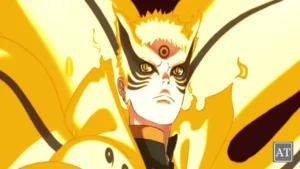
That boy grew up to be Hokage.
And the journey between those two images — between the lonely kid at Ichiraku and the man who changed his entire world through sheer refusal to quit — is one of the most emotionally resonant explorations of hard work, perseverance, and earned growth that anime has ever produced.
But here’s the thing that makes Naruto’s relationship with hard work genuinely different from every other shonen protagonist before and after him. It wasn’t just about training harder or wanting it more. Naruto changed what hard work actually means in a profound way that goes beyond the surface of the story. He changed it philosophically. He changed it emotionally. And for millions of real people watching his journey unfold, he changed it personally.
Let’s break down exactly how.
The World Naruto Was Born Into — Why the Odds Against Him Were Specifically Designed to Break Him
Before you can understand what Naruto’s hard work means, you have to understand what it was working against. Because the obstacles were not just difficult. They were systemic.
Naruto Uzumaki was born the night the Nine-Tailed Fox attacked Konohagakure. His father — the Fourth Hokage — sealed the demon inside him as a newborn, sacrificing his own life to stop the attack. The village survived. And then they looked at the infant who now contained the monster that had killed their people, and they made a choice.
They decided to fear him instead of honor him.
Most people in Konoha knew what Naruto carried. Adults who had lived through the attack, who had lost people they loved that night, looked at this child and saw the source of their trauma rather than its vessel. They kept their distance. They told their children to keep their distance. The result was a boy who grew up in total social isolation without ever being told why. Without understanding what he had done wrong. Without a single adult outside of the Third Hokage and Iruka-sensei willing to treat him like a human being deserving of basic warmth.
This is not a minor backstory detail. This is the entire foundation. Because what Naruto is working against from the beginning is not just his own limitations — it is a world that has pre-decided his value. A village that processed its own trauma by projecting it onto a child who couldn’t defend himself against that projection.
Hard work in that context means something fundamentally different than hard work in a context where effort is recognized and encouraged. When Naruto trains, when he refuses to give up, when he keeps standing up after every defeat — he is not just pursuing strength. He is asserting his existence against a world that spent his entire childhood suggesting he should not matter.
That distinction changes everything.
Dead Last — What It Actually Means to Start From Nothing
Naruto graduated from the Academy as dead last. He failed the graduation exam three times. He could not perform a basic clone jutsu reliably when every other student his age had already mastered it.
The conventional reading of this is straightforward — humble beginning, massive growth, inspiring trajectory. But there’s a layer underneath that reading that deserves attention.
Naruto’s struggle with the basics was not simply a lack of talent or effort. He was fighting with fundamentally compromised circumstances. The Nine-Tails’ chakra interfered with his ability to control his own chakra in the delicate way required for standard techniques. His instructors, many of whom resented him or kept their emotional distance, did not provide him the individualized support they might have offered another student. He was working harder than many of his peers and showing less result, not because the work was insufficient but because the system was not built to accommodate what he was.
Sound familiar? Because this is not a fictional problem.
The idea that hard work produces equal results regardless of starting conditions is one of the most persistent and damaging myths in human culture. Naruto’s early arc confronts this directly. He worked. He failed. He worked more. He failed again. And the world around him interpreted that failure as confirmation of what they already believed about him rather than as evidence of a system that needed to account for his specific circumstances.
What Naruto’s journey does is not argue that hard work erases disadvantage. It argues that hard work, sustained over time with enough stubborn intensity, can generate enough momentum to eventually overcome even systemic disadvantage. Not instantly. Not fairly. Not without cost. But eventually.
That is a more honest and more powerful message than the sanitized version. And it resonates because it reflects how progress actually works for real people working against real obstacles.
The Sasuke Problem — Why Hard Work Means Nothing Without the Right Rival
Here is something the Naruto fandom has discussed endlessly without always landing on the most important insight.
Sasuke Uchiha is not Naruto’s enemy. He is Naruto’s most important teacher.
Sasuke represents everything Naruto was not born with. Natural talent. Social recognition. Elite lineage. A prestigious clan with a legendary bloodline ability. From the moment he appears in the series, Sasuke is treated as a prodigy — the top of the class, the desirable teammate, the one everyone expects great things from. He does not have to fight for acknowledgment. It arrives automatically.
And Naruto looks at Sasuke and makes a decision that defines his entire approach to hard work. He does not resent Sasuke’s advantages. He does not conclude that the gap between them is permanent. He designates Sasuke as his rival — someone whose level he intends to reach — and then he begins the work of actually closing that gap.
This is psychologically extraordinary. Most people who grow up in deprivation develop one of two relationships with those who have more — either corrosive resentment that consumes their energy, or a defeated acceptance that the gap is simply reality. Naruto does neither. He converts the disparity into fuel. He uses Sasuke’s obvious superiority as a precise target to aim at rather than an indictment of his own worth.
And slowly — painfully slowly, in ways that cost Naruto enormous effort and genuine suffering — the gap closes. Not because Naruto got lucky. Not because the Nine-Tails handed him the win. Because he kept going when stopping would have been completely reasonable.
The dynamic between Naruto and Sasuke teaches something genuinely profound about hard work. The right rival — someone who is ahead of you and forces you to grow simply by existing at a level you haven’t reached yet — is one of the most valuable things you can have. Not someone to hate. Someone to chase. Someone whose level makes your current level insufficient and therefore activates growth that comfort never would.
Rock Lee — The Moment the Series Got Brutally Honest About Talent vs. Effort
If Naruto is the thesis statement on hard work in this series, Rock Lee is the proof.
Lee cannot use ninjutsu. He cannot use genjutsu. In a world where combat effectiveness is almost entirely defined by chakra-based techniques, Lee has none. He was born without the fundamental ability that his entire society treats as the baseline requirement for a shinobi. By every measurable standard the ninja world uses, Lee should not be able to compete.
And then he walks into a fight and moves so fast that Sasuke Uchiha — the Uchiha prodigy with the Sharingan that can track and copy nearly any technique — cannot see him.
Lee’s appearance in the Chunin Exams is one of the single most impactful moments in the entire series for what it communicates about the relationship between talent and effort. Lee took the one thing available to him — physical training, the absolute fundamentals of taijutsu — and pushed it so far beyond what anyone considered possible that it became its own form of genius. He did not overcome his limitation. He transcended the frame that defined it as a limitation.
But here’s the part that makes Lee’s story genuinely devastating rather than simply inspiring. His weights come off during the Gaara fight. He moves at speeds that tear his own muscles and joints apart. He pushes so far past his body’s limits that he destroys himself trying to win. And he still loses.
Hard work, the series is saying here, does not guarantee the outcome. Lee did everything right. He worked harder than almost anyone. He found a path where none seemed to exist. And in that specific fight, at that specific moment, it was not enough.
That honesty is what separates Naruto’s treatment of hard work from feel-good platitudes. Effort matters enormously. Effort is often the deciding factor. But effort exists in a world where other factors also operate, and sometimes those factors win. What matters — what Lee demonstrates by continuing to exist and train after that loss — is that you keep going anyway.
The Training Timeskip — What Two and a Half Years of Invisible Work Looks Like
The time skip between Part 1 and Part 2 of Naruto is not a narrative convenience. It is a philosophical statement.
Naruto leaves Konoha with Jiraiya and disappears for two and a half years. The audience doesn’t see the training. They see the departure and then they see the return. And the gap between those two moments — the unseen grind, the growth that happened entirely off camera — is where the real lesson lives.
When Naruto returns and demonstrates what he has become, the impact is powerful partly because of the contrast and partly because the effort that produced the change was invisible. Nobody watched him become who he returned as. He just went away and did the work.
This mirrors something real about how significant growth actually happens. The visible performances — the fights, the dramatic moments, the Rasengan fully realized in a clutch moment — are the surface. Underneath them is an enormous accumulation of invisible effort. Hours of practice that nobody saw. Failed attempts that nobody recorded. Frustration that never got an audience.
Naruto’s two-and-a-half-year gap teaches that the work worth doing is mostly unglamorous. That the growth which matters is largely private. That the transformation everyone sees in the return was built in the absence of anyone watching. And that showing up consistently for the unseen work is the actual definition of hard work — not the dramatic moments it eventually produces.
Pain’s Arc — When Hard Work Meets Its Philosophical Opposite
The Pain arc is where Naruto’s relationship with hard work gets tested at its deepest level.
Nagato — Pain — is not simply a villain. He is a counter-argument. He grew up in the same world of suffering that shaped Naruto. He lost people he loved. He worked, he bled, he built an ideology out of his grief and his powerlessness. And where Naruto’s hard work generated a philosophy of connection and perseverance, Nagato’s suffering generated a philosophy of controlled destruction as the only path to enforced peace.
When Naruto faces Pain, he is not just fighting a powerful enemy. He is fighting an argument. And the most important moment of that entire arc is not the combat — extraordinary as it is. It is the conversation afterward. Naruto sitting across from Nagato, a man who has destroyed everything and killed people Naruto loved, and choosing to understand him rather than hate him.
That choice — the most difficult act of will in Naruto’s entire journey — is only possible because of what all the hard work was actually building toward. Not just power. Not just technique. The capacity to meet the worst version of a human conclusion and still offer something other than its mirror.
Naruto’s hard work was never only physical. It was the daily practice of choosing to be the person he decided to be despite every pressure to become something else. Pain represents what happens when that choice is abandoned. And Naruto’s response to Pain is the most complete expression of what his hard work was always for.
This changes everything about how you understand the entire series.
The Hokage Ending — Why the Dream Was Never Really About the Title
Naruto becomes Hokage. The dream that he announced in the very first episode, that everyone around him dismissed as delusional, that he held onto through every defeat and every moment of doubt and every year of loneliness — it becomes real.
But here’s what the series understood from the beginning and what the ending confirms. The Hokage dream was never about the title.
The Hokage represents acknowledgment. It represents the village seeing you as worthy of being trusted with their protection and their future. For a child who spent years being treated as an invisible threat rather than a human being, the Hokage dream was the most extreme possible statement of “I deserve to exist here. I deserve to matter to these people.”
When Naruto achieves it — genuinely achieves it through everything he did and everything he survived — the emotional weight of that moment is not about political rank. It is about the complete arc of a human being who refused to let the world’s first impression of him be its final verdict.
That is what Naruto changed about the meaning of hard work. He shifted it from a transactional concept — effort in, reward out — to an identity concept. Hard work, in Naruto’s framework, is the daily act of becoming the person you decided to be, regardless of what anyone around you has decided you are. It is persistence as self-definition. It is effort as argument. It is showing up again and again not just to get stronger but to prove — to yourself first, to the world second — that you were worth the showing up.
The Generation That Grew Up With Him — Why Naruto’s Hard Work Hit Different
This has to be said directly. Naruto was not a story for people who had easy lives.
The kids who connected most deeply with this series — who still feel something catch in their chest when they hear certain OST tracks, who remember exactly where they were when they watched certain scenes — were the ones who recognized something in Naruto’s specific brand of struggle. The isolation. The being overlooked. The being told, explicitly or implicitly, that they were less than the people around them.
Naruto did not tell those kids that the world would be fair. He did not promise that hard work would always be recognized or rewarded in proportion to what it deserved. He showed them a version of what it looks like to work anyway. To believe in yourself when the evidence for it is entirely internal, when nothing outside you confirms it yet, when the only reason to keep going is your own stubborn refusal to accept the conclusion that the world has drawn about you.
For an entire generation, that was not inspiration. That was instruction. That was a map for surviving circumstances that deserved better responses than defeat.
Naruto changed the meaning of hard work by making it personal. By grounding it not in results but in identity. By insisting that the effort you put in — even unseen, even unrewarded, even insufficient in the short term — is part of who you are. And nobody can take that from you.
The knucklehead ninja from the Hidden Leaf village, eating ramen alone, shouting his dream at a sky that wasn’t listening yet — he changed something real in the people who watched him. And that kind of change does not expire.
Believe it.